Introduction
Winter ice storms can turn healthy-looking trees into serious hazards overnight. Heavy ice buildup puts enormous stress on branches, trunks, and root systems, causing trees to crack, split, or fall without warning. If you have a damaged tree on your property, waiting too long to address the problem can put your home, vehicles, family, and neighbors at risk.
Whether a large branch is hanging over your roof, a tree is leaning toward your house, or storm damage has blocked your driveway, knowing what to do next can help you stay safe and avoid costly property damage.
In this guide, we'll explain the warning signs of dangerous ice storm tree damage, when emergency tree removal is necessary, and how homeowners in Grand Rapids and West Michigan can respond safely after severe winter weather.
Why Ice Storms Are So Hard on Trees in Grand Rapids
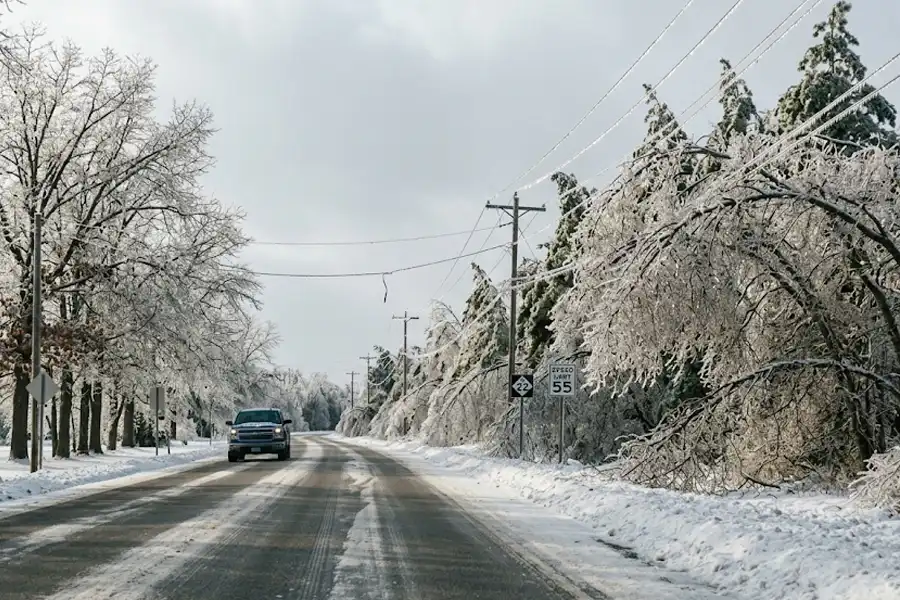
West Michigan experiences a wide range of winter weather conditions, but ice storms are among the most damaging for trees. Unlike snow, which can often be brushed off branches or distributed evenly throughout the canopy, ice bonds directly to every surface it touches. Branches, twigs, leaves, and even power lines become coated with a thick layer of frozen precipitation.
The result is a dramatic increase in weight.
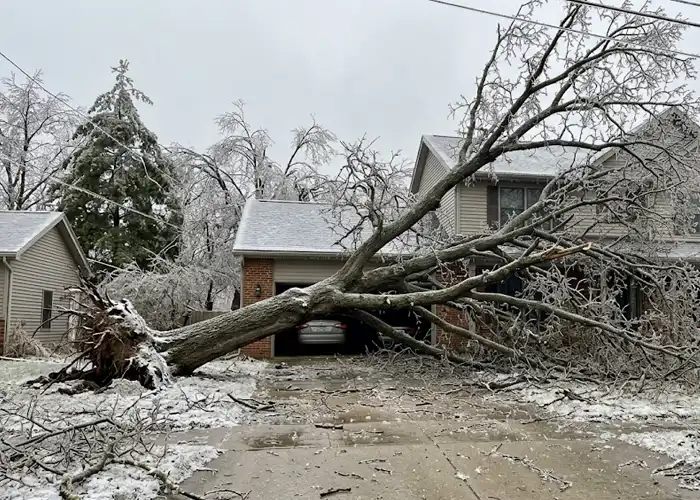
A mature tree can suddenly be supporting hundreds or even thousands of additional pounds. Branches that appeared healthy before the storm may snap under the pressure. Existing cracks and structural weaknesses become magnified. In severe cases, entire trees can uproot or split down the middle.
The Weight of Ice on Branches and Limbs
Even a relatively small accumulation of ice can create major problems. Ice is surprisingly heavy, and tree limbs are not designed to support excessive weight for extended periods.
As the ice accumulates, branches begin to bend. Some recover once temperatures rise, but others break suddenly. Large limbs can fall onto homes, vehicles, fences, sheds, and utility lines.
This is particularly dangerous because damage may continue even after the storm has ended. Many tree failures occur hours or days later as temperatures fluctuate and weakened branches finally give way.
Common Tree Species Vulnerable to Ice Damage in West Michigan
Certain tree species commonly found throughout Grand Rapids and West Michigan are more susceptible to ice storm damage.
These include:
- Silver Maple
- Bradford Pear
- Siberian Elm
- Willow
- Ash Trees
- Boxelder
- Cottonwood
Trees with multiple trunks, narrow branch angles, or existing decay are especially vulnerable.
On the other hand, healthy oak trees and certain native hardwoods often withstand ice storms better, although no species is completely immune.
Signs You Need Emergency Tree Removal After an Ice Storm
Not every damaged tree needs to be removed immediately. In many cases, proper pruning can restore a tree's health and structure.
However, some situations require emergency attention because the risk of failure is too high.
Large Broken Limbs Hanging Over Structures
One of the most common storm-related hazards is a partially broken limb hanging above a home, garage, driveway, or sidewalk.
These limbs are often referred to as "hangers" because they remain suspended in the canopy after breaking.
A hanging limb may weigh hundreds of pounds and can fall without warning. Wind, additional snowfall, or slight temperature changes can trigger a collapse.
If you notice broken limbs above areas where people walk or gather, contact a professional tree service immediately.
Split or Cracked Tree Trunks
A split trunk is one of the clearest indicators of serious structural damage.
Vertical cracks often occur when ice overloads major scaffold branches or when multiple stems pull apart under stress.
Even if the tree remains standing, its structural integrity may be compromised.
In some cases, cabling or bracing can help preserve the tree. In others, removal is the safest option.
Trees Leaning After the Storm
A tree that suddenly develops a lean should never be ignored.
Leaning may indicate:
- Root damage
- Soil movement
- Partial uprooting
- Trunk failure
Trees that were previously upright but begin leaning after an ice storm should be professionally evaluated as soon as possible.
Trees Touching Power Lines
This situation requires immediate action.
Never attempt to trim or remove branches near power lines. Electricity can travel through tree limbs and create life-threatening hazards.
If a tree is touching utility lines, contact the utility company and stay a safe distance away until professionals arrive.
Uprooted or Partially Uprooted Trees
When roots begin lifting from the ground, the tree becomes unstable and unpredictable.
A partially uprooted tree may remain standing temporarily, but additional wind or ice can cause complete failure.
Emergency removal is often necessary to eliminate the risk.
What to Do Immediately After Discovering Tree Damage
The moments following an ice storm can be stressful, especially when property damage is involved.
Taking the right steps can improve safety and help streamline insurance claims.
Prioritize Safety
Your first concern should always be personal safety.
Avoid walking beneath damaged limbs or standing near leaning trees.
Keep children and pets away from affected areas until the damage has been assessed.
Stay Away from Downed Power Lines
Always assume a downed wire is energized.
Never touch a wire, tree limb, fence, or puddle near a power line.
Contact emergency services or your utility provider immediately.
Document Damage for Insurance Purposes
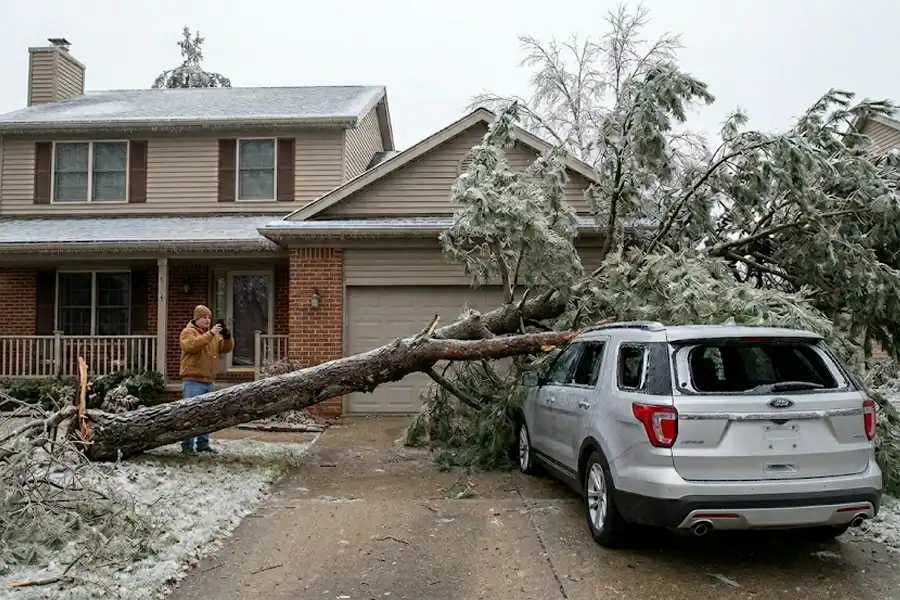
Before cleanup begins, take photographs from a safe distance.
Capture images of:
- Damaged trees
- Property damage
- Vehicles affected
- Roof damage
- Fences and outbuildings
Documentation may help support an insurance claim later.
Contact a Professional Tree Service
A qualified tree service can determine whether the tree can be saved or if removal is necessary.
Professional assessments help homeowners avoid unnecessary removals while addressing legitimate safety concerns.
Why DIY Tree Removal Can Be Dangerous
After a storm, many homeowners are tempted to handle cleanup themselves.
While removing small debris may be manageable, damaged trees present unique hazards.
Hidden Structural Damage
A tree may appear stable from the ground while suffering significant internal damage.
Cracks, decay, and weakened attachment points are not always visible.
What looks like a simple cut may trigger an unexpected failure.
Unstable Limbs Under Tension
Storm-damaged trees often contain limbs trapped under extreme tension.
When cut improperly, branches can spring back violently.
These sudden movements can cause severe injuries.
Equipment and Safety Risks
Chainsaws are among the most dangerous tools used by homeowners.
Adding winter weather, unstable footing, and damaged trees significantly increases the risk.
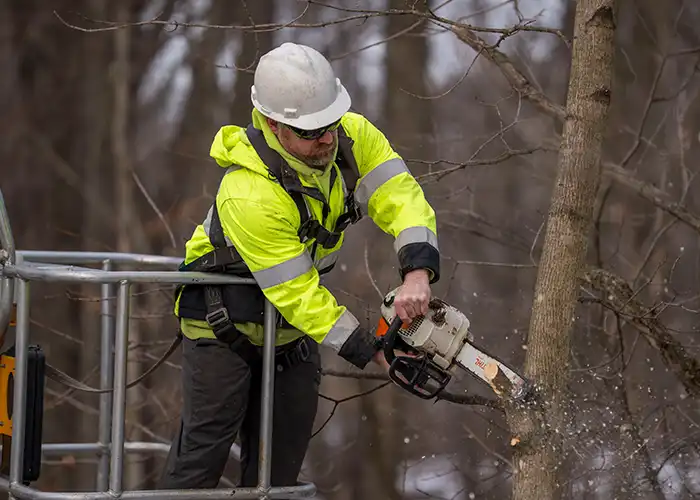
Professional crews use specialized equipment, protective gear, rigging systems, and established safety procedures to control the removal process.
How Emergency Tree Removal Works
Many homeowners have never hired a tree service before and may not know what to expect.
Initial Damage Assessment
The first step is a thorough inspection.
Professionals evaluate:
- Tree stability
- Structural defects
- Nearby structures
- Utility hazards
- Accessibility
This assessment determines the safest removal approach.
Safe Tree Removal Procedures
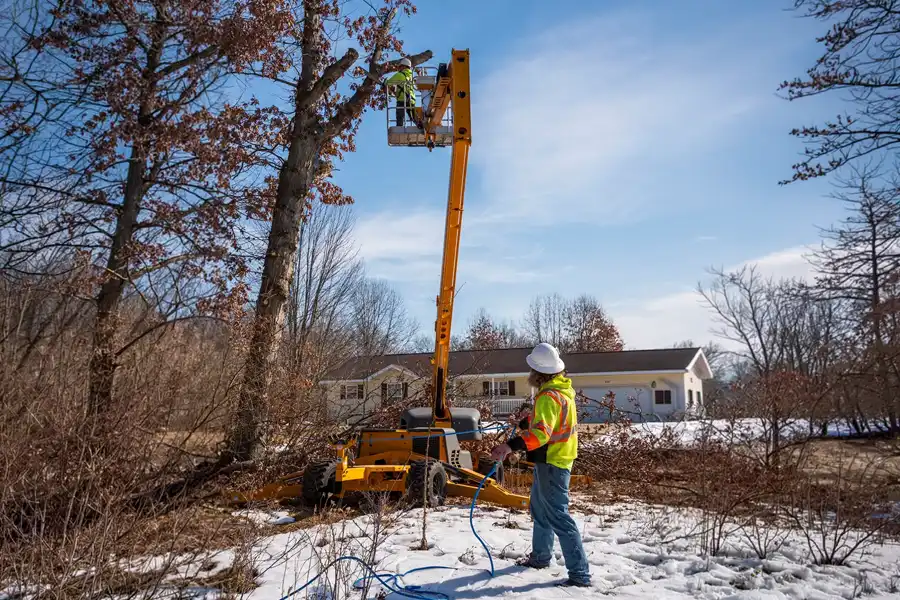
Depending on the situation, crews may use:
- Climbing systems
- Aerial lifts
- Cranes
- Rigging ropes
- Specialized cutting techniques
Rather than dropping an entire tree at once, sections are carefully lowered to the ground.
Cleanup and Debris Removal
After removal, debris is processed and removed from the property.
Many homeowners also choose stump grinding services to fully restore the area.
Can Insurance Cover Ice Storm Tree Damage?
Insurance is one of the first questions homeowners ask after a storm.
The answer depends on the circumstances and policy details.
Situations Commonly Covered
Coverage often applies when a tree damages:
- Homes
- Garages
- Sheds
- Fences
- Other insured structures
Removal costs may also be partially covered.
Situations That May Not Be Covered
If a tree falls without causing property damage, removal costs may become the homeowner's responsibility.
Coverage varies between providers.
Steps to Help Your Claim
To improve the claims process:
- Take photos immediately
- Save invoices
- Keep records of communications
- Document cleanup efforts
- Contact your insurer promptly
Preventing Future Ice Storm Tree Damage
Although no tree is completely storm-proof, proactive maintenance can significantly reduce risk.
Regular Tree Pruning
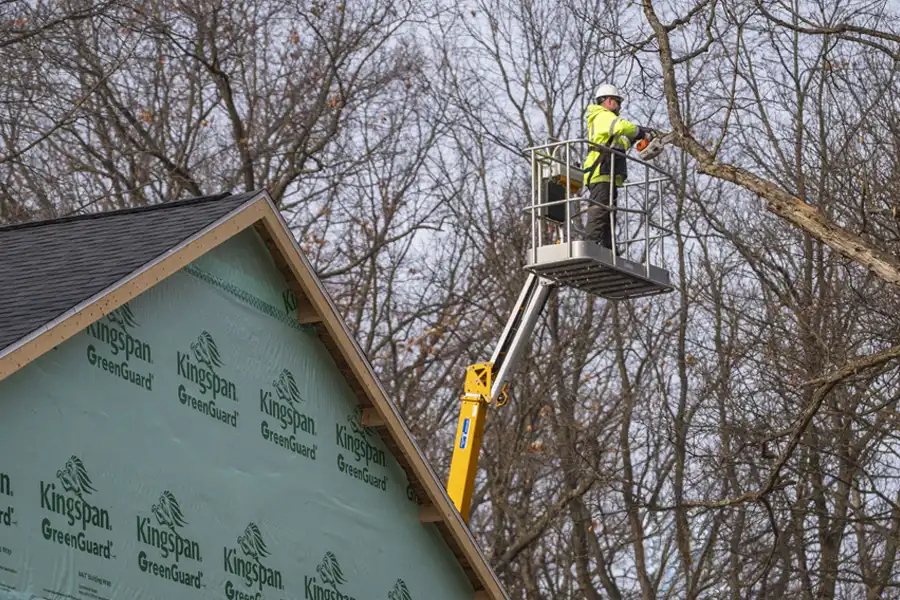
Strategic pruning removes weak, dead, and poorly attached branches before they become hazards.
A properly pruned tree generally withstands winter weather more effectively.
Removing Hazardous Trees Early
Trees showing signs of decline should be evaluated before storm season arrives.
Warning signs include:
- Dead branches
- Cavities
- Fungal growth
- Significant leaning
- Trunk cracks
Addressing these issues early is often less expensive than emergency removal.
Tree Cabling and Bracing
Some valuable trees can benefit from structural support systems.
Cables and braces help distribute loads and reduce the likelihood of failure during storms.
An experienced tree professional can determine whether support systems are appropriate.
Emergency Tree Removal in Grand Rapids and West Michigan
When an ice storm damages a tree, time matters.
Delaying action can increase the risk of property damage, personal injury, and higher cleanup costs.
Whether you're dealing with a fallen tree, a dangerous hanging limb, or a tree threatening your home, professional evaluation provides peace of mind and helps ensure the problem is handled safely.
G2 Tree Services provides emergency tree removal, storm damage cleanup, tree trimming, stump grinding, and hazard tree assessments throughout Grand Rapids, Rockford, Ada, Kentwood, Wyoming, Byron Center, Comstock Park, and surrounding West Michigan communities.
Frequently Asked Questions
How do I know if my tree needs emergency removal?
Trees that are leaning, uprooted, cracked, split, or have large broken limbs over structures should be inspected immediately.
Can a tree recover after ice storm damage?
Yes. Many trees can recover with proper pruning and care. However, severe structural damage may require removal.
How quickly should I call a tree service after an ice storm?
As soon as you notice a hazardous condition. Prompt evaluation helps prevent further damage and improves safety.
Is winter a good time for tree removal?
Yes. Winter tree removal is often efficient because trees are dormant and frozen ground can reduce lawn damage.
What should I do if a tree falls on my house?
First, ensure everyone's safety. Contact emergency services if needed, notify your insurance company, and then call a professional tree service for emergency removal.
Does homeowners insurance cover emergency tree removal?
Coverage varies by policy. Many insurers provide coverage when a tree damages an insured structure.
Conclusion
Ice storms are a fact of life in West Michigan, but the damage they cause shouldn't be ignored. A cracked trunk, hanging limb, leaning tree, or uprooted root system can quickly become a dangerous situation.
The safest approach is to have storm-damaged trees professionally evaluated before they cause additional problems.
If you need emergency tree removal after an ice storm in Grand Rapids or the surrounding West Michigan area, contact G2 Tree Services today for prompt, professional assistance and a free estimate.